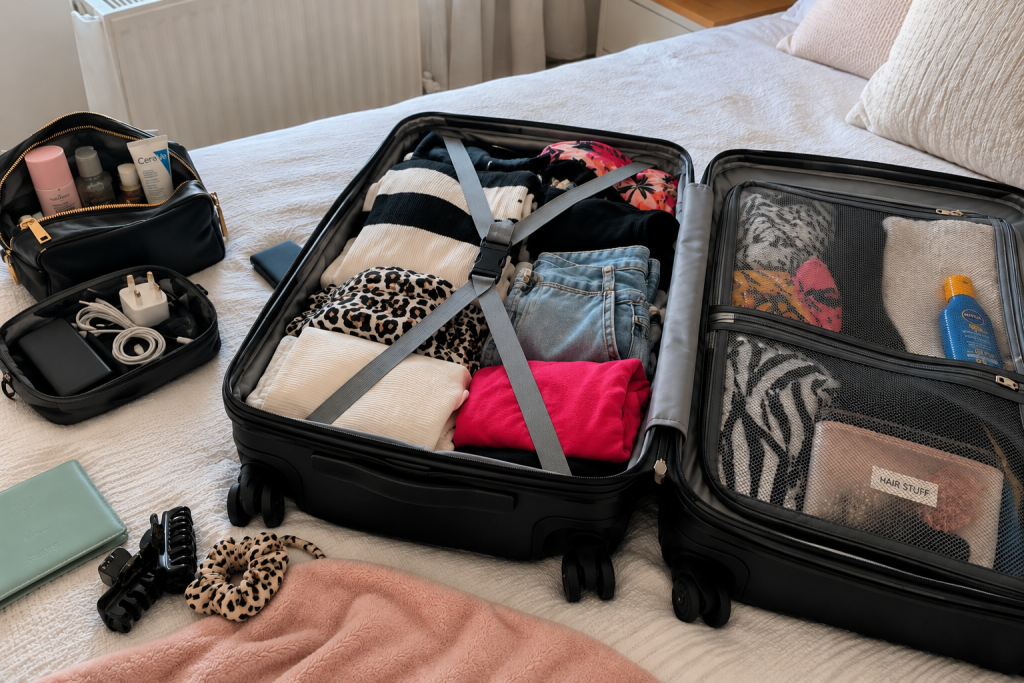
Packing for your holiday starts with good intentions: the promise you make to yourself to “be prepared this time” and to “only pack what you need”. You either open your suitcase a week in advance and start placing things inside it, or you start throwing stuff in the day before. But, let’s face it, most of us are still running around chucking things in willy-nilly at 11pm the night before, even though we have to be up at 3am for the drive to the airport!
This packing list is here to help avoid any cries of “arghh, I forgot the…” (although it does require you to actually look at the list in advance and buy what you need!). It covers the things you may need, from travel documents and clothes to toiletries, technology and hand-luggage essentials. You probably won’t need every item on it, so use it as a master checklist and pick the bits that suit your holiday.
Quick holiday packing checklist
In a hurry? Start with the things that would be difficult, expensive or impossible to replace:
☐ Passport or other required identification
☐ Tickets and booking confirmations
☐ Wallet, payment cards and any currency you plan to carry
☐ Essential medication and relevant documents
☐ Phone and charger
☐ Travel insurance details
☐ House and car keys
☐ Clothes and footwear suitable for your plans
☐ Essential toiletries
☐ Anything your children or travel companions cannot manage without
Before you put anything in the suitcase
To create a good packing list, you need to think about what you actually booked. Before you even begin, check:
- Your baggage allowance. Look at the current size, weight and item limits supplied by your airline, cruise line, rail/bus operator or holiday company. Allowances and restrictions vary and can change—you don’t want to get hit with extra fees.
- The latest weather forecast. Check a weather app or website for your destination to give you an idea of how the weather looks for your time there; most will let you look up to 10 or 14 days ahead. Don’t just assume that because it’s a sunny place, it won’t be windy or have showery days.
- What your accommodation provides. Hairdryers, towels, toiletries, irons and beach towels may already be waiting for you. Check before giving them a free holiday in your suitcase.
- Your itinerary. Beach days, excursions, formal evenings, sports and special occasions may all need different clothing or equipment.
- Laundry facilities. Access to a washing machine or laundry service can dramatically reduce how much you need. If you need to use specific powder, softener or other laundry products, don’t forget to pack those too!
- Your transport. This is important, as it can help you decide which bag or suitcase to use! Are you just putting it in a car and not touching it again until arrival, or will you need to haul it between train platforms, airport terminals and so on?
- Current official travel information. Entry requirements, health guidance, local laws and other important information can change, sometimes at short notice.
Important Travel Check
Before booking and again shortly before travelling, UK travellers should check the latest Foreign, Commonwealth & Development Office (FCDO) travel advice, along with the relevant official authorities for their destination.
Travel documents and important information
Keep required documents together and somewhere secure but accessible. Depending on your journey, your list may include:
☐ Passport or accepted identification
☐ Boarding passes or travel tickets
☐ Accommodation confirmation
☐ Transfer, excursion and activity bookings
☐ Travel insurance details
☐ Driving licence and any documents required for driving or car hire
☐ Essential medical or medication documents, such as a doctor’s letter or equipment manual
☐ Emergency contact details
☐ Payment cards and any cash you intend to take
☐ Copies or secure digital backups of important documents
Check all requirements against official sources for your destination and travel provider. Don’t rely on an old social-media post, a well-meaning relative or something Dave from the pub remembers from 2009.
It can also help to keep booking references, insurance contact details and key addresses somewhere you can access without mobile data. Just make sure any copies containing personal information are stored securely.
Clothes
The exact amount depends on the length and style of your holiday, the weather and whether you can wash anything while you’re away. Use this as a pick-and-choose list:
☐ Underwear
☐ Socks or hosiery
☐ Everyday tops
☐ Trousers, shorts or skirts
☐ Dresses or jumpsuits, if worn
☐ Nightwear
☐ A jumper, cardigan or other warm layer
☐ A coat, jacket or waterproof layer suitable for the forecast
☐ Comfortable walking shoes
☐ Sandals, smarter shoes or activity-specific footwear if needed
☐ Swimwear
☐ Beach or pool cover-up
☐ Sportswear or hiking clothes
☐ A smarter outfit if your plans require one
☐ Belt and other useful accessories
☐ Sun hat or warm hat, depending on the trip
Pack outfits, not possibilities
Instead of picking individual clothes you might fancy wearing, plan outfits around your actual days and activities. Choose pieces that work together, and wear bulky items while travelling when that is comfortable and practical.
Lay everything out before it enters the case. If you have packed several items that only work with one particular outfit, or multiple emergency jumpers for a hot beach break, have a gentle rethink.
Toiletries and personal care
Check what your accommodation supplies and take only the amount you’re likely to use:
☐ Toothbrush and toothpaste
☐ Deodorant
☐ Shampoo and conditioner
☐ Shower gel, soap or preferred wash products
☐ Skincare products
☐ Sunscreen where appropriate
☐ After-sun product (just in case!)
☐ Hairbrush, comb and hair products
☐ Hair ties or clips
☐ Razor and shaving products
☐ Make-up and remover, if used
☐ Period products
☐ Contact lenses, case and solution
☐ Glasses and a protective case
☐ Nail clippers or small grooming items
☐ Insect repellent where appropriate
☐ Tissues or wipes
Decanting larger products into smaller, clearly labelled containers can save space. Place anything prone to leaking inside a secure wash bag or reusable sealed pouch, close the lids properly and avoid filling containers right to the top.
If you’re flying, check the current security restrictions for every airport on your journey, as well as your airline’s rules. UK passengers can start with the official GOV.UK hand-luggage restrictions. Requirements can change suddenly so we won’t give you information that may be out of date by the time your flip-flops reach the suitcase!
Medication and health essentials
Medication deserves more planning than ordinary toiletries because it may not be easy to replace while you’re away.
☐ Regular prescribed medication
☐ Any relevant prescription, letter or supporting documentation
☐ Medication needed during the journey
☐ A sensible supply for the planned trip and possible disruption
☐ Glasses, contact lenses and spares where needed
☐ Personal medical supplies
☐ A small first-aid kit appropriate to your plans
☐ Sunscreen, insect repellent or other destination-appropriate protection
Keep essential medication accessible (hand luggage!) and follow your transport provider’s storage and carriage rules. Rules covering medicines and medical equipment can vary between destinations, so check with the relevant official authorities well before departure. Seek advice from a qualified healthcare professional if you’re unsure about your personal needs.
Electronics
Electronics are very good at arriving on holiday without the one cable that makes them useful.
☐ Mobile phone
☐ Phone charger and cable
☐ Plug adaptor suitable for your destination
☐ Power bank, if permitted by your transport provider
☐ Headphones or earbuds
☐ E-reader or tablet
☐ Laptop and charger, if genuinely necessary
☐ Camera, batteries and memory card
☐ Smartwatch charger (the tiny menace of the charging world)
☐ Chargers for children’s devices
☐ Any medical-device chargers
At the time of this article, current UK CAA guidance says power banks should be carried in the cabin and not packed in checked luggage. Restrictions and conditions still apply, so check the latest CAA baggage guidance and your airline’s rules before travelling.
Keep important devices charged before departure and download anything you want to use offline, including boarding passes, tickets and entertainment. Check how your travel provider requires boarding passes to be displayed as many will not accept a screenshot.
What to pack in your hand luggage
Hand luggage should contain the things you need during the journey and anything you really wouldn’t want separated from if your checked case wandered off to explore without you.
☐ Travel documents and identification
☐ Wallet, cards and cash
☐ Phone and charger
☐ Essential medication and documents
☐ Valuables such as jewellery
☐ Glasses or contact-lens essentials
☐ Keys
☐ Headphones and entertainment
☐ Snacks suitable for the journey
☐ An empty reusable water bottle to fill where permitted
☐ A warm layer or scarf
☐ Tissues and personal-care essentials such as lip balm, hand cream and sanitary products
☐ A spare top and underwear, particularly when checking a bag
☐ Immediate essentials for children or anyone in your care
Always check current hand-luggage size and weight limits with your travel provider. Security rules and restrictions on food, liquids, medicines, batteries and other items may also apply. Use official information for every stage of the journey rather than assuming the rules will be identical on the way home.
Beach, pool and sunshine extras
For a warm-weather or poolside holiday, consider:
☐ Swimwear (top tip, take a spare!)
☐ Cover-up or light layer
☐ Sun hat
☐ Sunglasses and protective case
☐ Sunscreen
☐ Beach bag or foldable day bag
☐ Beach towel if your accommodation doesn’t provide one
☐ Waterproof pouch or dry bag
☐ Reusable water bottle
☐ Comfortable sandals or water shoes if appropriate
☐ After-sun or preferred soothing skincare
Sun strength, weather and local conditions vary, so check reliable current guidance for the destination and choose protection suitable for you and your plans.
Useful extras, not compulsory “must-haves”
These can make some trips easier, but you absolutely don’t need to buy the entire travel accessories aisle!
☐ Packing cubes
☐ Laundry bag
☐ Foldable shopping or beach bag
☐ Small day bag
☐ Luggage tag with sensible contact information
☐ Eye mask and earplugs
☐ Reusable sealed bags
☐ Compact umbrella
☐ Stain-removal pen
☐ Refillable water bottle
☐ Travel pillow for longer journeys
☐ Pen
The best extras solve a real problem for your trip. If an item adds weight, needs its own instructions and will probably remain untouched until you unpack at home, it may not be an essential after all.
Travelling with children
Travelling with children means adding a few extra essentials to your packing list.
Depending on their age and needs, consider:
☐ Required travel documents
☐ Medication and health supplies
☐ Nappies, wipes and changing items
☐ Feeding supplies and suitable snacks
☐ Spare clothes for the child and accompanying adult
☐ Comfort item, but ideally not the only irreplaceable one in existence
☐ Quiet journey entertainment
☐ Headphones suitable for the child
☐ Pushchair, carrier or car seat where needed
☐ Sleepwear and bedtime essentials
☐ Sun or cold-weather protection
Check current rules for baggage, child equipment, food, liquids, car seats and identification directly with your travel providers and official authorities.
Things you can probably leave at home
Overpacking usually happens one innocent “just in case” at a time. Before closing the case, look for:
- Too many outfit choices. Pack for the holiday you’ve planned, not six imaginary versions of yourself.
- Several pairs of similar shoes. Shoes are bulky, heavy and extremely talented at occupying useful space.
- Full-size toiletries. Take smaller amounts unless you genuinely expect to use the whole container.
- Things supplied by the accommodation. Check first and borrow their hairdryer’s baggage allowance instead.
- Expensive valuables you don’t need. If you would spend the whole trip worrying about it, consider leaving it safely at home.
- Items easily bought at your destination. This doesn’t apply to essentials or specialist products, but ordinary low-cost items needn’t always travel with you.
- Too much entertainment. Downloaded options take up less space than a small travelling library.
- Anything prohibited or restricted. Check current official and provider rules before packing.
Ready to pack?
The perfect holiday packing list isn’t the longest one, it’s the one tailored to your destination, plans and personal needs. Check the important details through current official sources, protect the essentials and be honest about how many “just in case” outfits will ever leave the wardrobe.
Then close the case, step away from it and look forward to your holiday!